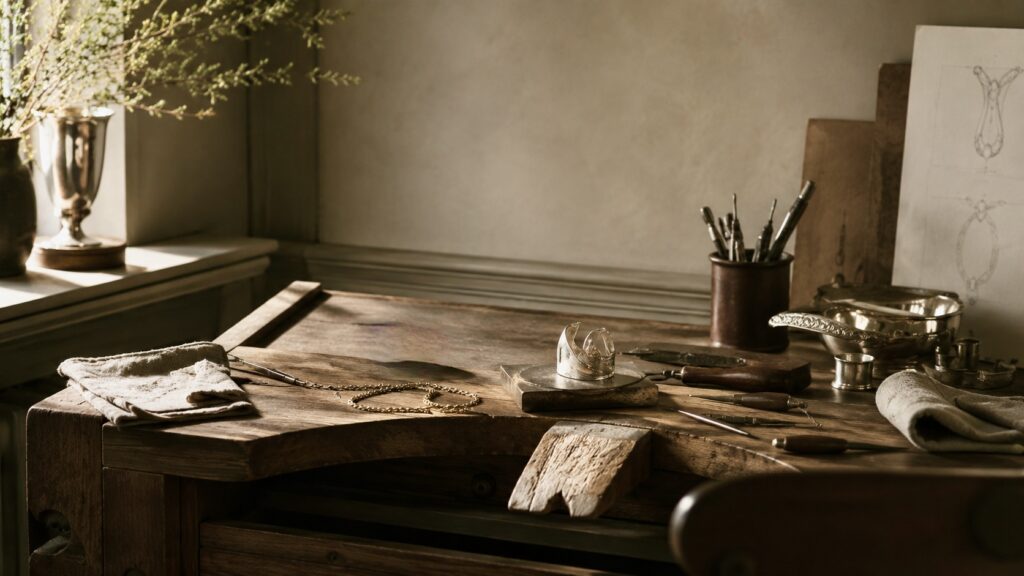
British luxury is often seen through the finished object.
A ring in a box. A silver piece on a table. A restored charm returned to its chain. A case opened, lined and fitted. A polished surface catching the light.
But the finished object is only the final expression of something deeper.
Behind jewellery, silver, objects and works of art there is always a place where judgement is applied. A place where weight, proportion, material, finish, repair, use and longevity are considered before anything reaches the customer.
That place is the workshop.
The workshop matters because luxury is not created by presentation alone. It is created by standards. It is created by people who understand material, tools, construction and use. It is created by decisions made before the object is photographed, packaged, described or sold.
In British luxury, the workshop has always carried a particular importance.
It is where restraint becomes visible. Where proportion is corrected. Where metal is tested by hand and eye. Where repair is understood as part of ownership. Where a maker, restorer, polisher, setter, silversmith or specialist knows that small decisions will determine whether an object lasts.
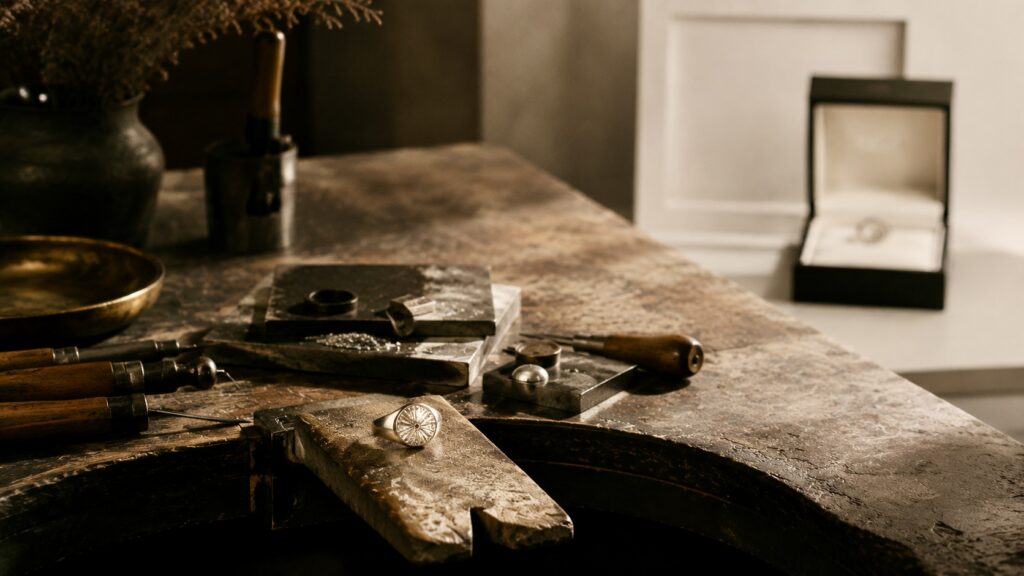
Luxury begins before the showroom
The showroom gives an object its setting.
The workshop gives it its truth.
A piece of jewellery can be beautifully displayed and still be badly made. A silver object can look impressive and still feel wrong in the hand. A case can appear refined and still fail in use. A restored object can look bright and yet lose its character if the work has been done without judgement.
Luxury depends on what happens before the object is presented.
The workshop asks questions that marketing cannot answer.
Does the clasp feel secure?
Does the chain carry the weight properly?
Does the hinge open cleanly?
Does the surface still have life?
Has the engraving been respected?
Has the hallmark been understood?
Has restoration improved the object without erasing its history?
Will this piece continue to be worn, used, held, repaired and valued?
These are not abstract questions.
They are the questions that decide whether an object deserves to last.
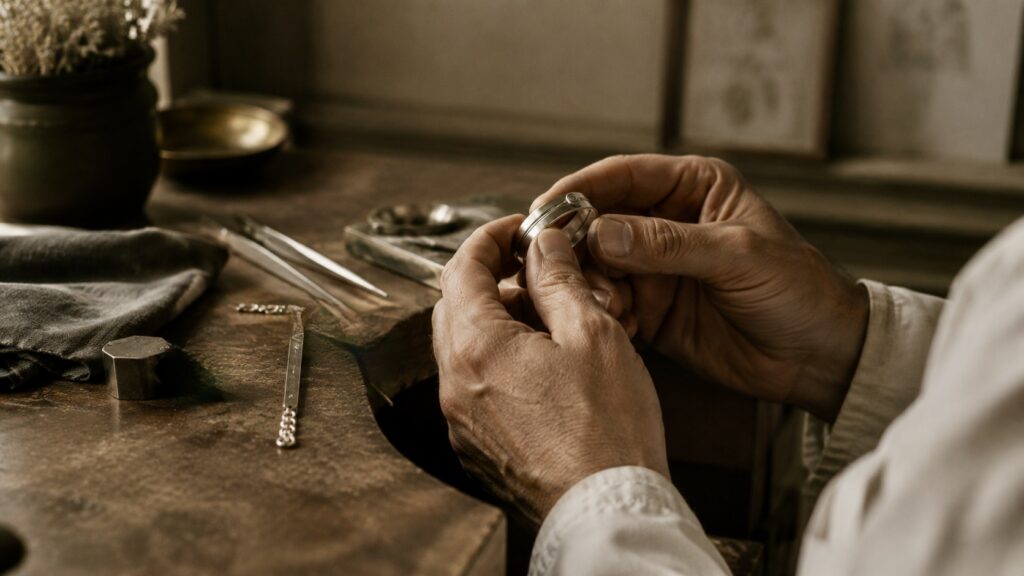
The workshop as a place of judgement
A workshop is not only a place of making.
It is a place of judgement.
In jewellery and silver, judgement matters as much as technique. The eye must learn proportion. The hand must learn pressure. The material must be respected. A polished surface must not be stripped of its character. A repair must not pretend to be untouched history. A new piece must justify its form, not merely imitate the past.
The best workshop decisions are often quiet.
A little less polish.
A stronger link.
A cleaner fitting.
A better balance.
A more suitable chain.
A more honest description.
A decision not to over-restore.
A decision not to make something at all until it can be made properly.
British luxury is at its strongest when this judgement is allowed to lead.
Not everything should be rushed into production. Not everything should be restored to look new. Not everything should be enlarged, brightened, simplified or made more commercial.
The workshop protects objects from that kind of carelessness.
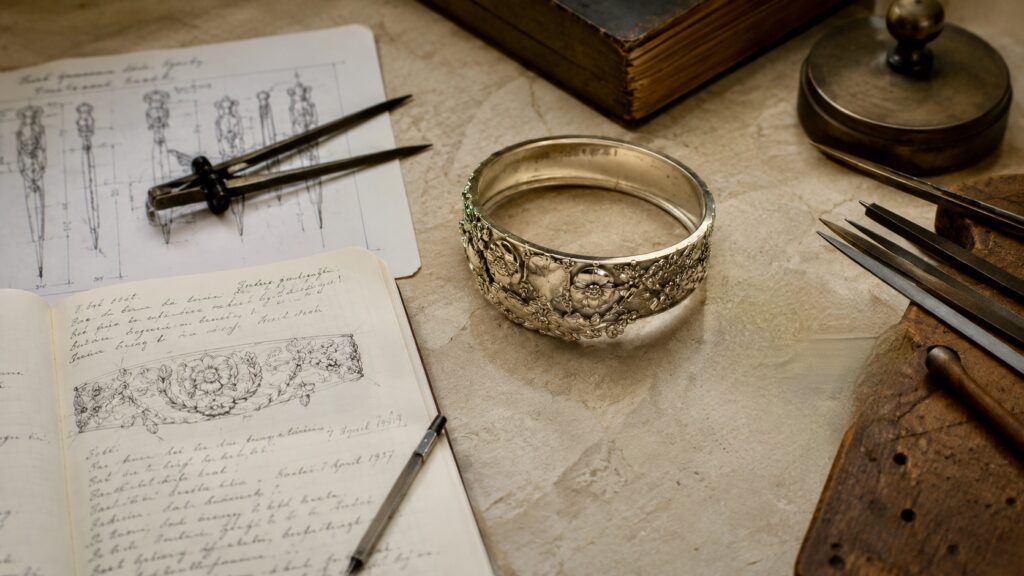
Restoration belongs at the centre of luxury
Restoration is sometimes treated as secondary to new making.
It should not be.
To restore an object well requires knowledge, restraint and respect. A restorer must understand what the object is, how it was made, what has happened to it and what should be preserved.
Jewellery, silver and works of art carry evidence. Wear can be part of the story. Marks can be part of the identity. Patina can be part of the beauty. Earlier repairs can be part of the object’s life.
Good restoration does not erase all of this.
It allows the object to continue.
That is why restoration belongs at the centre of responsible luxury. It extends the life of existing objects. It preserves precious materials. It respects workmanship already invested. It allows owners to keep, wear, use and pass on pieces that might otherwise be neglected or replaced.
The restored object is not lesser because it has lived.
Often, that life is exactly what gives it meaning.
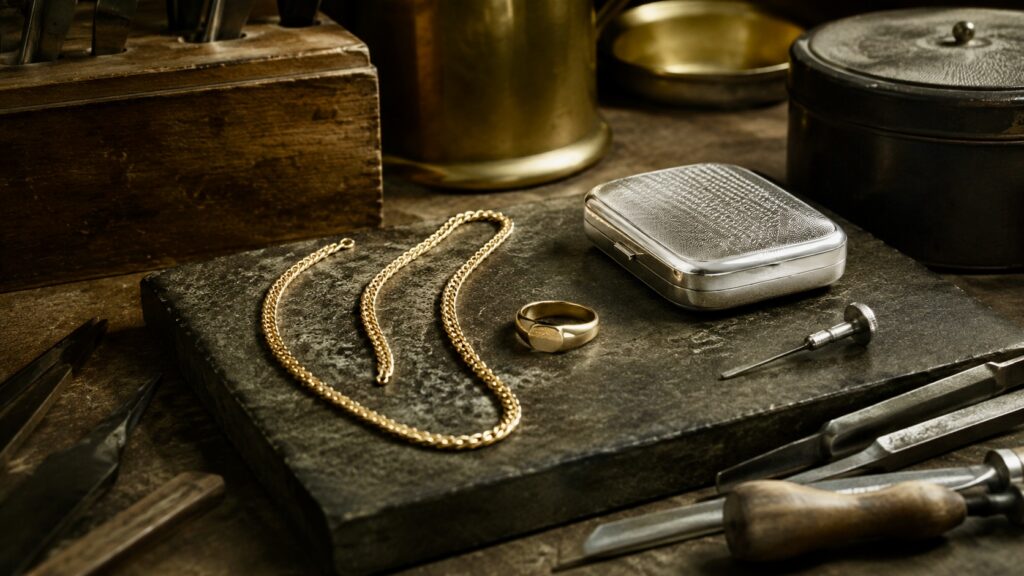
Archive knowledge and the working hand
Archive knowledge becomes more valuable when it reaches the workshop.
A catalogue entry, hallmark, maker’s mark, photograph, measurement or historic reference can tell part of the story. But an object also reveals itself through touch, weight, construction and wear.
How was it made?
Where did it fail?
How was it repaired?
Which parts endured?
Which proportions still feel right?
Which details now look decorative but were once practical?
The workshop is where archive knowledge becomes practical intelligence.
It helps restoration become more accurate. It helps product descriptions become more honest. It helps future work become more intelligent.
This is especially important for companies working with historical references, restored vintage pieces and future design. Archive study should not blur past and present. It should make the distinction clearer.
A restored vintage piece remains a restored vintage piece.
A new creation remains a new creation.
Archive knowledge may inform future work, but it should not be used as a shortcut for claims that cannot be supported.
The workshop helps hold that line.
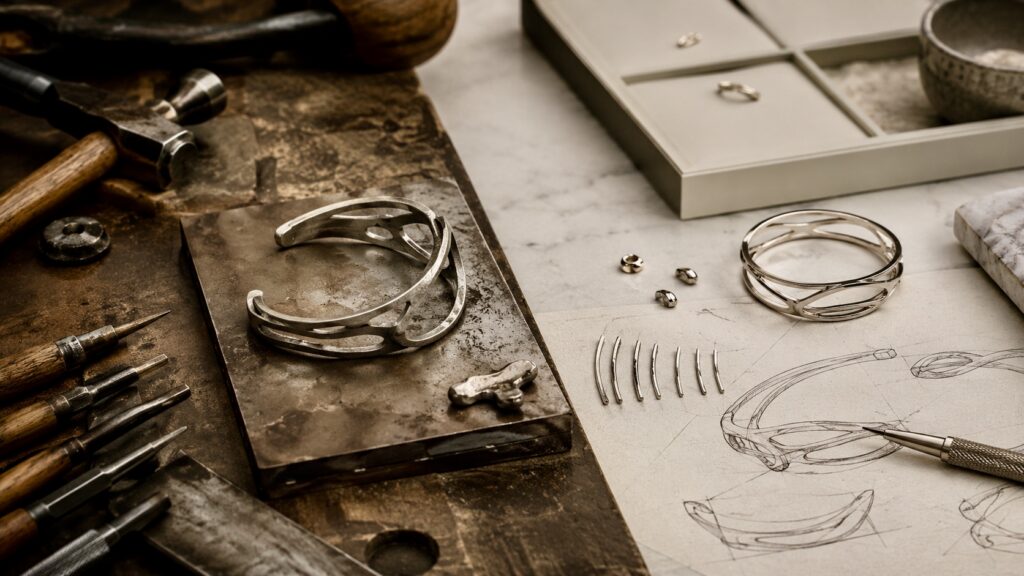
British making and the discipline of restraint
British luxury does not need to shout.
At its best, it is measured, useful, beautifully finished and made with an understanding of daily life. Jewellery should sit properly on the body. Silver should feel right in the hand. Objects should work as well as they impress.
The workshop keeps that discipline alive.
It understands that proportion is not a minor detail. It understands that material honesty matters. It understands that a piece must be more than a surface. It must have structure, balance and purpose.
In jewellery and silver, British making is also tied to description and trust.
Hallmarking, material clarity, condition notes, restoration details and accurate product language all belong to the same culture of care. They tell the customer what something is, not merely how it should be imagined.
That clarity is part of luxury.
A serious object deserves a serious description.
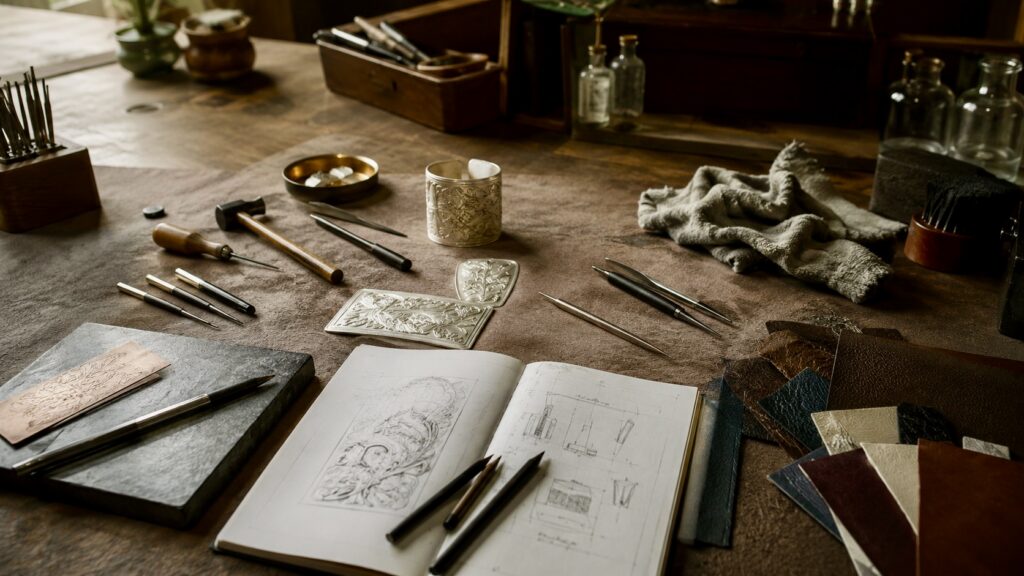
The workshop and future manufacturing
Future manufacturing should not begin with trend.
It should begin with standards.
For The Company of Extraordinary Companies, the workshop is not only a place for repair and restoration. It is also part of the future. It is where future jewellery, silver, objects and works of art must be tested against the values that matter: material, proportion, use, finish, repairability, presentation and long-term value.
New work should not be produced simply to create activity.
It should be made because it deserves to exist.
That is a high standard, but it is the only one worth applying in luxury. The world does not need more disposable objects dressed in expensive language. It needs better things, made and described with greater care.
The workshop is where that discipline begins.
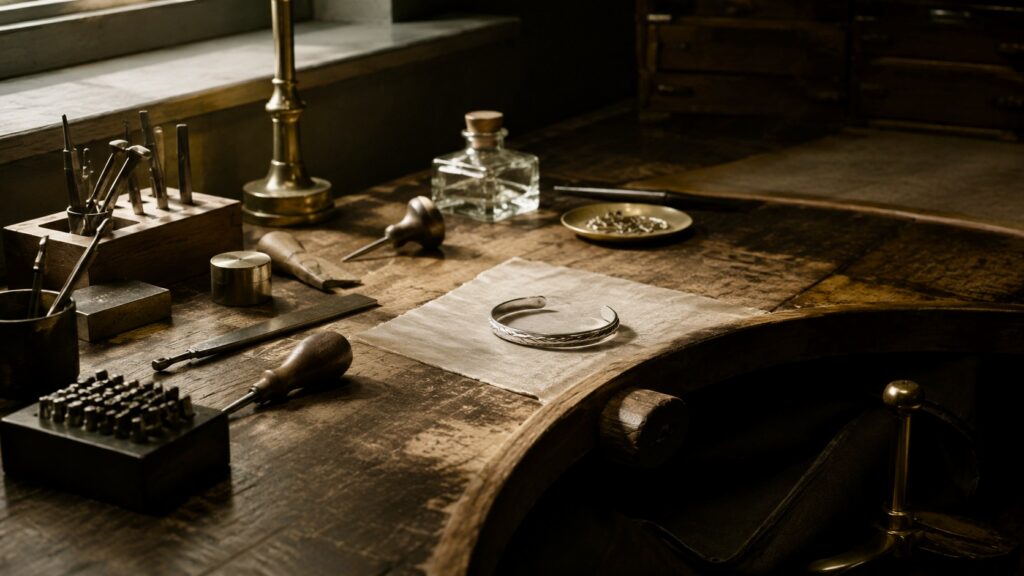
Skills, specialists and collaboration
No serious workshop exists in isolation.
Jewellery, silver, restoration and works of art depend on specialist skills. Setting, polishing, engraving, silversmithing, leatherwork, box-making, case fitting, conservation, photography, research and description each require knowledge.
The role of a company is not to pretend that all expertise sits under one roof.
The role is to recognise the right skill, use it carefully and give it the respect it deserves.
British luxury has always depended on networks of specialist hands. Workshops, outworkers, craftspeople, restorers and suppliers all form part of the reality behind finished objects.
That reality should not be hidden by romantic language.
It should be respected.
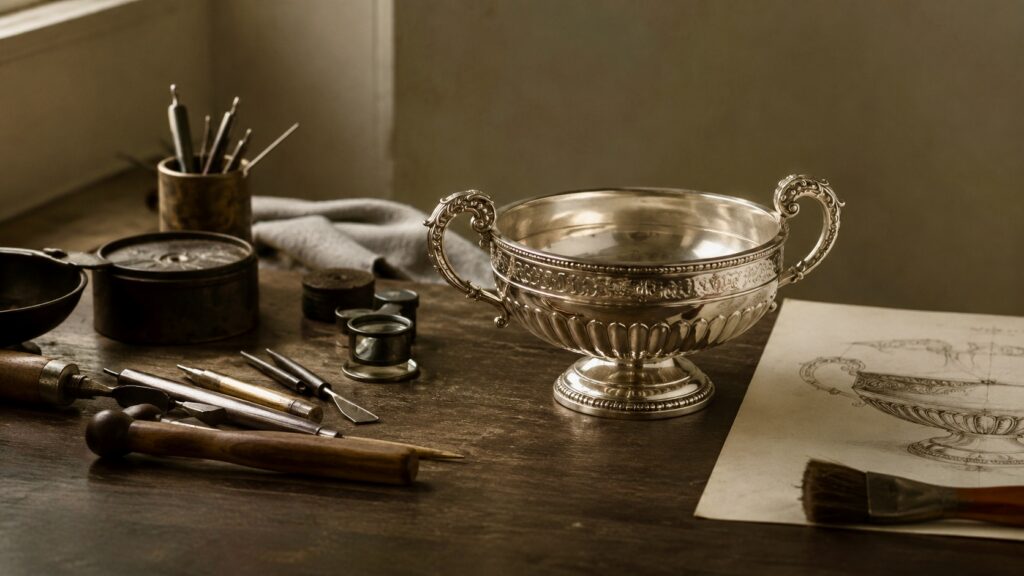
Why the workshop matters now
The workshop matters now because luxury is under pressure from speed.
More products.
More launches.
More content.
More claims.
More surface.
Against that, the workshop offers something slower and more serious.
It asks whether an object is worth making. Whether it can be repaired. Whether the material has been respected. Whether the description is accurate. Whether the history is being used honestly. Whether the customer is being given clarity rather than theatre.
This is not nostalgia.
It is a standard for the future.
The companies that last will not be the ones with the loudest claims. They will be the ones able to show the strongest relationship between language, material, skill and evidence.
The workshop is where that relationship is tested.
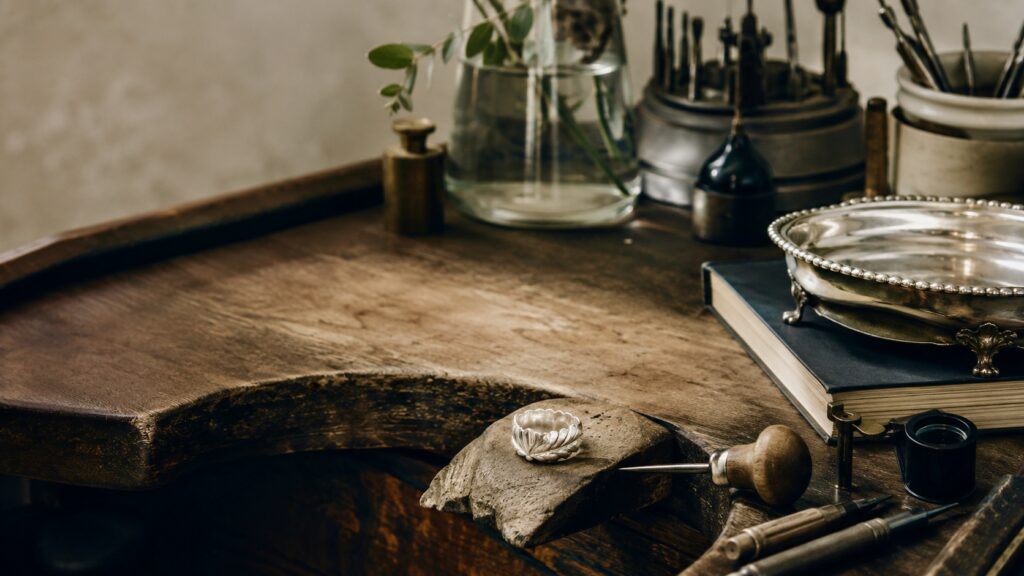
A standard behind the object
The role of the workshop in British luxury is simple, but demanding.
It turns intention into object.
It turns archive knowledge into practical understanding.
It turns restoration into continued use.
It turns material into form.
It turns standards into something that can be worn, held, opened, repaired, gifted, kept and passed on.
That is why the workshop should sit at the centre of any serious British luxury company.
Not as decoration.
Not as marketing theatre.
As the place where the work becomes true.